

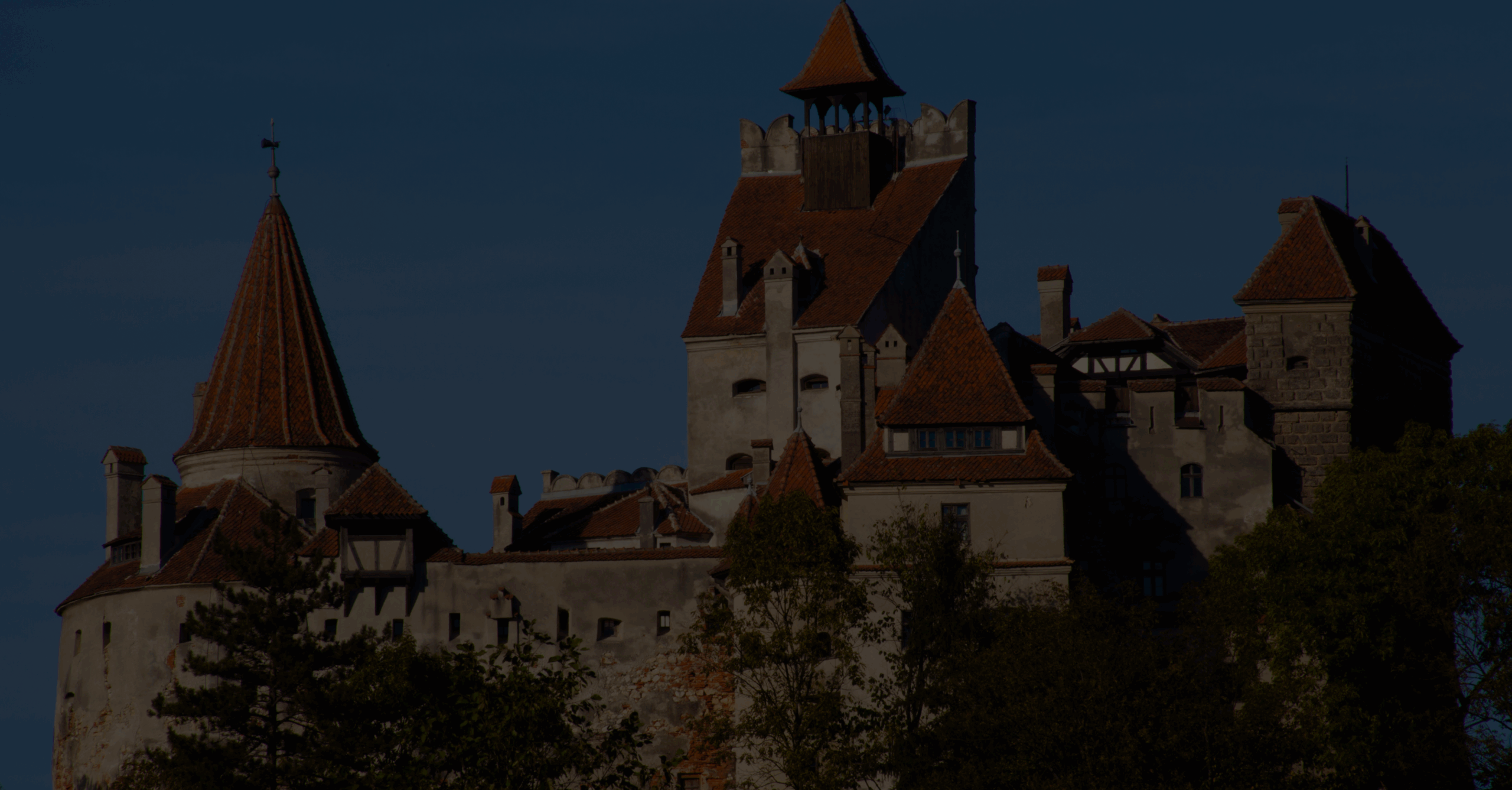
TEUTON KNIGHTS
In the early Middle Ages, when the whole of Europe was in a process of mass political and social reorganization, Transylvania was overwhelmed by waves of migration coming from the immense Asian steppes. After the formation of the Hungarian state and its Christianization under King Stephen, around 1003, the Hungarian sovereignty adopted a policy of territorial expansion and extension of political influence over neighboring populations, including the Carpatho-Danubian space. During the reign of King Andrew II, the influence of the Hungarian crown began to be reflected in the southeastern pass of Transylvania.
This period coincided, for a short time, with the settlement, on the other side of the Carpathians, of a migratory people called the Cumans. The incessant invasions of the Cumans on the Transylvanian sector of the Carpathians constituted a major concern for Hungarian sovereignty. King Andrew II, in search of security, decided to formulate a defense plan. This, in turn, triggered the most controversial episode in Transylvanian history: the debate regarding the possible presence of the Teutonic Knights in the southeastern region of Transylvania, to ensure the application of Hungarian policies in the area. Unfortunately, to this day, sufficient evidence has not been discovered to confirm the presence of the knights in Țara Bârsei during the period 1211–1225. If these crusaders had been present in the area, there is no doubt that they would have exploited its geopolitical advantages, as the Bran Gorge had become an essential strategic area for anyone wishing to gain military control over the pass.
Regardless of the presence or absence of the Teutonic Knights in southeastern Transylvania, the Hungarian sovereignty understood the importance of fortifying the Transylvanian borders. Coinciding with the beginning of the German migration into the intra-Carpathian space, the Hungarian crown developed a vast network of fortifications. The need to build such fortifications became imperative, for military reasons, especially in the southern regions of Transylvania. The period between the mid-14th century and the mid-16th century therefore represented the most prolific era in the history of medieval Transylvania in terms of the construction of fortifications. Towards the end of the 14th century, the Hungarian sovereignty developed a more sophisticated defense plan, which was based on interior fortifications, in addition to those located on the borders of the kingdom.
KING LOUIS I OF ANJOU ORDERED CONSTRUCTION OF BRAN FORTRESS
During the reign of Louis I of Anjou, the Hungarian crown continued its expansionist policy in the Balkans. At the same time, Wallachia and Moldavia were consolidated as formal political entities. The high military expectations stemming from these formations culminated in a series of confrontations between the Hungarian king and Wallachia. The Hungarian king's military strategy was largely based on the fortification of the passes that provided military access to Wallachia. The ongoing conflicts and disagreements between Louis I of Anjou and Wallachia convinced the king to approve a plan for the construction of a fortress at Bran.
The Bran Fortress was built for both strategic and economic reasons. Its purpose was to intercept the road leading to Transylvania, including the pass, and to ensure the protection of the Hungarian customs.
At the time of the foundation of Bran Fortress, trade through the Bran Pass was prohibited. Instead, trade moved upstream, to Rufla Arbor (Rucăr). To obtain help in building the fortress, Louis I of Anjou promised the inhabitants of Brașov that the customs house would be moved to the new fortress they were going to build at Bran.
To achieve his strategic goals, the Hungarian king relied on the large Transylvanian cities (Brașov, Sibiu and Bistrița), considered capable of countering Transylvania's tendencies towards autonomy. He ordered the construction of fortresses at Tălmaciu (1370) and Bran (1377), with the aim of forming, together with the fortress of Severin, a defensive chain on the southern border of Transylvania. In fact, the plan to build the Bran fortress dates back to 1364, according to documents recovered from that time.
It is also important to mention a major historical factor that contributed to the Fortress' survival in the face of great turmoil: all military conflicts in the Bran Pass were regional confrontations, secondary in importance, and therefore involved only a moderate use of armed force.
Every time a powerful army from the south (for example, the Ottoman army) organized a campaign against a Central European state, such as Hungary or Austria, a more favorable geographical route was chosen, crossing the Balkan Peninsula from Serbia to Hungary, to avoid the Carpathian passes, recognized as extremely problematic, even for a large army, such as the Ottoman one.
The strategic intention of the Hungarian king to build Bran Fortress coincided with the will of the inhabitants of Brașov, eager to consolidate their geographical and economic position in the area, overseeing the trade route that crossed the pass. On November 19, 1377, the "birth certificate" of Bran Fortress was issued. This was described as a privilege granted to the city of Brașov by Louis I of Anjou, from the Kingdom of Zvolen (Slovakia).
The document stated the following: the inhabitants of Brașov, “voluntarily and uncoerced, generously and unanimously”, promised to build a “new fortress on Dietrich’s rock” (novum castrum in lapide Tydrici aedificare). It was to be built “by their own efforts”. They were also obliged “to clear the forests there, high and low, as deemed appropriate; to level the land, to bring and provide stone, lime and wood, necessary for the construction of the fortress”. In addition, they provided “masonry, stonemasons and carpenters, at their own expense”.
Upon completion of the construction, the fortress became the property of the Hungarian sovereignty and was supervised by a castellan, appointed by the king. The castellan had the duty of forming a garrison, made up of mercenaries, archers and ballistae. For the “efforts and expenses” of the people of Brașov, their rights over thirteen fairs in Țara Bârsei were reinstated, “as in the old days”. The agreement confirms both the involvement of the Brașov community in the defense of the borders and the positive relations with the Hungarian sovereignty.
It is remarkable that, before the end of the reign of Louis I of Anjou (before his death in 1382), the construction of the fortress had been completed. The speed of its construction, as well as the special interest of the Hungarian king in the region, were due to the complexity of the political realities of the era. The ruler of Wallachia, Vladislav Vlaicu, pursued a policy that, until the conquest of Vidin in 1368, was directed against Hungarian interests in the region. The competition for influence led, as expected, to a direct confrontation between the two medieval states.
According to some historians (such as Fotino), one of the battles took place at Bran. "When Louis (the king of Hungary) attacked Vladislav (the ruler of Wallachia), a great battle was fought at Bran, with victory on the Romanian side."
Following the Romanian victory, Bran Fortress received possession of a territory that included several villages from Țara Bârsei: Baciu, Cernatu, Satulung, Turcheș, Târlungeni, Zizin, Purcăreni, Crizbav, Apața, Zărnești and Tohan (the latter two remained part of the territory only until 1395). As owners of the territory, the administrators of the fortress had the right to use its resources, including forests, waters, hunting and fishing grounds, wells and common estuaries.
As planned, the location of the fortress ensured dominance over the Bran Pass, controlling one of the most important access routes to Transylvania and amplifying its military significance. The protection of the pass was ensured by the fortress garrison. Generally, this was composed of mercenaries: the historian Ioan de Târnava mentions “English detachments and ballistae”. Their number usually did not exceed 12–24 men, although, for example, in 1599 there were 40 ballistae, and in 1658 there were 30. Their main mission was to block the enemy in front of the fortress until help arrived from Râșnov and Brașov.
The rapporteur of the documentation was the nobleman Johannes de Schafeneck, castellan of the Landskron fortress, located near Tălmaciu, built to defend the Turnu Roșu pass.
BRAN FORTRESS IS IN THE POSSESSION OF SIGISMUND OF LUXEMBOURG
Documents from 1395, 1398 and 1406 expressly state that Bran Fortress (and, implicitly, the territory around it) was in the possession of the Hungarian king Sigismund of Luxembourg. The most obvious evidence seems to be the presence of the Hungarian king at Bran in 1395. It is assumed that the king used the fortress during an invasion of Wallachia, when he removed Vlad the Usurper, a claimant to the throne of the country, who was in opposition to Mircea the Elder, an ally of Sigismund of Luxembourg.
The occupation of Adrianople by the Turks in 1354 preceded the conquest of the Balkan Peninsula by the Ottoman Empire, which by the end of the XNUMXth century had extended to the Danube. The imminent Ottoman threat, which loomed over the inhabitants north of the Danube, led to the crystallization of a common interest among the Christian populations of the region.
The first raid of the Turks into Transylvania in 1394, together with the victory of the Wallachian voivode Mircea the Elder at Rovine in 1395, once again encouraged the strengthening of the bond between the two neighboring countries, Hungary and Wallachia.
The rulers of the two countries met in Brașov in the spring of 1395 (on March 7) and established a Treaty of Alliance. The treaty was most likely based on the principles of vassalage specific to the era, built on the pyramidal hierarchical relationships of the Middle Ages. It consecrated the Hungarian king Sigismund of Luxembourg as "Senior", and the ruler of Wallachia, Mircea the Elder, as "Vasal". The treaty also established the obligations of the two parties in the event of an Ottoman invasion.
It is very possible that this treaty was signed at a later date, during the siege of the old administration of Brașov, located behind the current "Hotel Aro". The treaty also recognized the rule of the Wallachian ruler over some territories beyond the Carpathians: Severin, Amlaș and Făgăraș (Mzrcha voivoda Transalpinus dux de Fuguras et banus de Zeurine). After the signing of the Treaty of Brașov, some researchers attribute the rule over Bran Fortress to ruler Mircea the Elder. Unfortunately, neither the document dated March 7, 1395, nor the one from 1406, signed in Severin, contain any reference to the granting of this right to the Wallachian ruler.
THE CONQUEST OF THE FORTRESS BY MIRCEA THE OLD
The first documentary confirmation that Bran Fortress was “in other hands” does not appear until 1412. This fact leads us to the conclusion that, starting with 1412, the nature of Mircea the Elder’s rule over the fortress was limited to the rights of use and exploitation (dominium utile), and not to a full ownership right, in accordance with the vassalage relationship between the two rulers. During the period of occupation and use of Bran Fortress by the Wallachian ruler, a customs post was erected near the fortress. 3 bani were charged “from horsemen passing through Turciu (Bran)” and 1 bani from “pedestrians.”
Evidence of this is found in a document issued in 1412 by the voivode of Transylvania, Stibor of Stiboricz, which referred to the relocation of the customs point, as the tax was originally collected at Törcz (in Brașov). On 6 August 1416, Bran was mentioned as a customs point of Wallachia in a document issued by ruler Mircea the Elder, confirming the privileges granted by his predecessors to Brașov merchants. Also in this document, Bran is mentioned for the first time under the name "Turcu," a name derived, most likely, from the Turcu River, which flows through Bran.
Another solid piece of evidence supporting the hypothesis that the fortress was in the hands of the Wallachians is found in the document issued by Sigismund of Luxembourg in Casovia, on July 7, 1419, which mentioned that Mircea the Elder and his son — who had only been granted the right to appoint the castellans — had displeased the king, as the castellans they had appointed had committed various abuses in collecting customs duties and regulating the goods brought to customs by the inhabitants of Brașov. However, the problems had arisen somewhat earlier, when the Wallachian ruler had appointed the prefects, with the king's consent, in 1412. The Szekler consul, Michael, actually removed the prefect from the administrative structure of the fortress in early 1419.
THE TURKISH CAMPAIGNS OF CONQUEST
Despite the fact that Bran Fortress was mentioned in 1421 among the possessions of the rulers of Wallachia, both in documents issued by ruler Radu Prasnaglava and in those issued by ruler Dan II in 1422, it seems that, after the death of Mircea the Elder in 1418, Sigismund of Luxembourg ordered a series of defensive measures in the fortress. These were necessary during a period of political instability in Wallachia, preceding the imminent Ottoman attack.
Aware of the importance of the Bran Pass and the limited ability of the Wallachian ruler to respond to the threat of war, Sigismund of Luxembourg withdrew control of Bran Fortress from Mircea the Elder's immediate successor. It seems that in 1427, the Hungarian king briefly stopped at Bran to personally inspect the fortifications in response to the growing Ottoman threat. On this occasion, authority over Bran Fortress was transferred to the Szekler.
The special attention that the Hungarian sovereignty paid to this border crossing proved to be fully justified. Shortly thereafter, in the summer of 1432, a major expedition was organized into Wallachia, accompanied by a plundering incursion into the Land of Barsei. Both would have passed through the Bran Pass. The Wallachia ruler at the time, Alexandru Aldea, recognized Ottoman suzerainty and even participated in the Ottoman plunder of the Land of Barsei. Shortly thereafter, in 1436, the Turks undertook a new plundering incursion into the area.
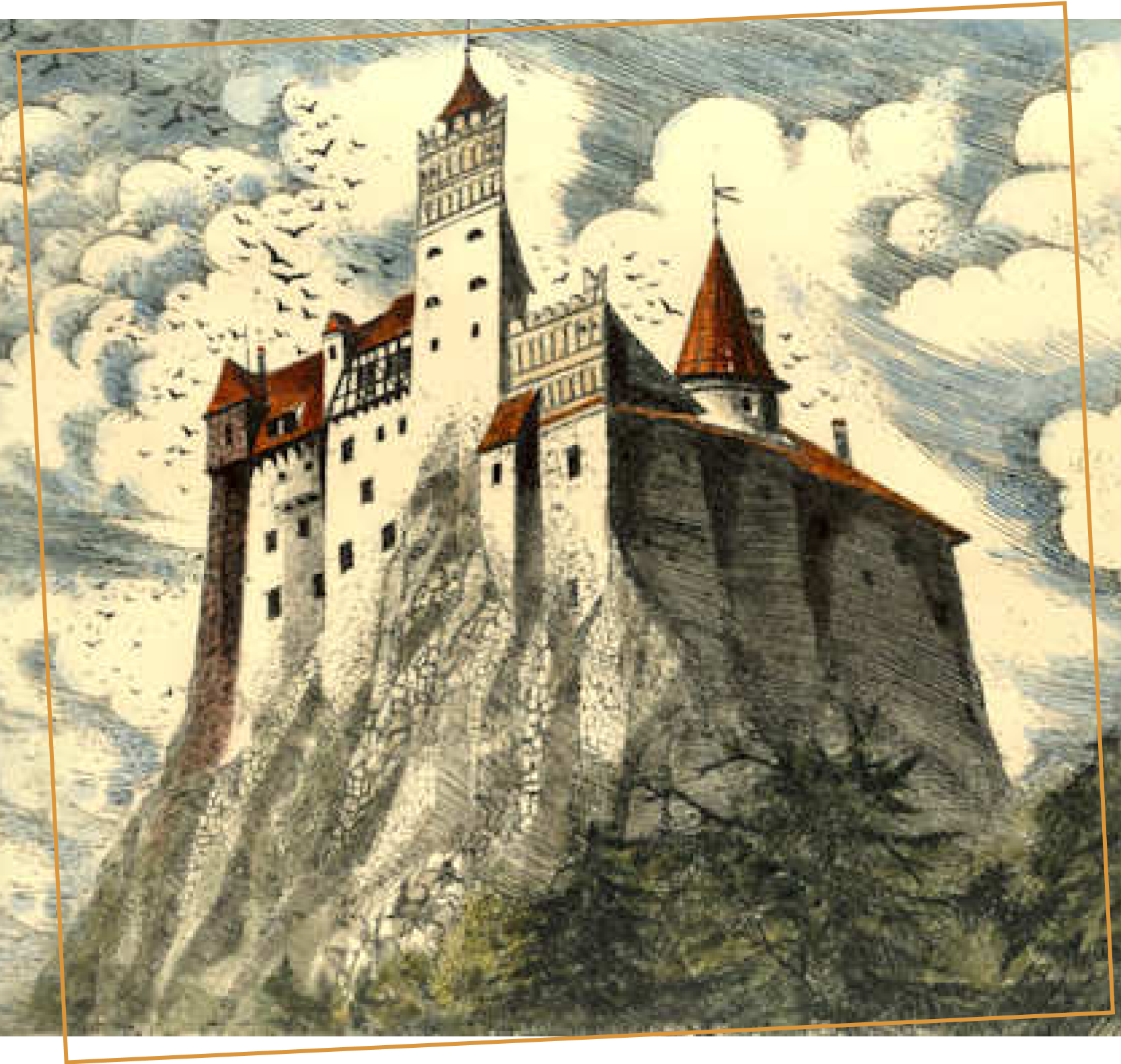
1211-1918
BRAN FORTRESS
Any historical episode is determined by two essential elements: time and space, constant factors that determine its place in the evolution of a human community.
The land between Bucegi and Piatra Craiului has determined a series of significant episodes, from prehistory to the present, hosted by a major geographical and historical point: the Bran Pass.
The Bran Pass, one of the most important Transcarpathian passages, had a dynamic history.
IANCU DE HUNEDOARA DEFEATED THE OTTOMAN ARMY AT BRAN
The summer of 1438 (June–July) brought with it an Ottoman military campaign in Transylvania, a true campaign of conquest, in which the Ottoman sultan himself seems to have participated. The Ottoman army entered Transylvania through Severin, crushing any local resistance it encountered. It advanced through the Sebeș Valley and then plundered Mediaș and Sighișoara. Although the Ottoman army failed to conquer Sibiu and Brașov, it devastated the villages of Țara Bârsei. Finally, the Turks returned to Wallachia through the Bran Pass, bringing numerous slaves and loaded with booty. The campaign left deep marks on the inhabitants of Brașov and prompted them to strengthen the fortifications of the citadel and the Bran Pass, in order to be able to resist future invasions. This was done at their expense, although the fortress did not belong to them.
The Voivode of Transylvania, Iancu of Hunedoara, defeated a division of the Ottoman army in 1441–1442 right at the walls of Bran Fortress. During his reign as voivode, the position of consul of the Szekler was merged with that of voivode of Transylvania, so that Iancu held both positions. As one of the main duties of the consul of the Szekler was to defend the eastern borders of the Principality of Transylvania, after the merger of the two positions, the defense of the eastern borders became the responsibility of Iancu of Hunedoara. He correctly assessed the position of Bran Fortress as a strategic point in this area of Transylvania and paid due attention to it. This era can be characterized as the strategic and military apogee of Bran Fortress. During this period, the castellans of Bran held, for short periods, the positions of vice-consul of the Szekler and even voivode of Transylvania. Also at that time, fortification projects were carried out on the northern side of the fortress and the East Tower was built, which included part of the old gallery.
In 1448, as regent of Hungary, John of Hunedoara appointed Nicolaus de Bizere as castellan of Bran Fortress for a period of 10 years. It is said that he was a Romanian nobleman from Banat, known as Nicolae de Bizere.
IANCU DE HUNEDOARA DEFEATED THE OTTOMAN ARMY AT BRAN
The remarkable figure of the Wallachian ruler Vlad Tepes (Vlad Dracula), son of Vlad Dracul, does not seem to have played a significant role in the history of Bran Fortress. The connection between Vlad Tepes and the fortress was made much later and has very little to do with the historical deeds of the Wallachian ruler. It is based, rather, on his lifestyle, which history has constantly shrouded in mystery and legend.
The only verifiable facts about this connection are the indirect result of Vlad Tepes' foreign policy efforts, within which relations with Transylvania and Hungary are particularly important.
From the beginning of his first reign, in 1448, Vlad the Impaler entered into conflict with the merchants of Brașov, a fact recorded in a letter addressed to them on October 31, 1448, transmitted through Bran. This conflict would last throughout his reign and, after his death, its consequences would reach considerable proportions.
The disagreements were partly due to the protectionist economic regime imposed by Vlad the Impaler. The main victims of this regime were the Transylvanian merchants, especially those from Brașov. At the same time, tensions were amplified due to the hostile attitude of the Brașovans towards the Wallachian ruler, manifested through a permanent policy of supporting other pretenders to the throne of Wallachia.
During his second reign, Vlad Tepes still tried to follow the policy of his grandfather, Mircea the Elder, to gain the favor of the Hungarian king by signing a treaty by which the Wallachian ruler recognized the king's suzerainty over Wallachia. The main reason for signing the treaty was, obviously, the support that Vlad could obtain in his anti-Ottoman policy. Thus, a few weeks after the beginning of his second reign, Vlad passed through the Bran Pass to Brașov to meet with the Hungarian king Ladislaus the Posthumous and sign the treaty. This also included a concrete agreement between Vlad Tepes and the Brașov merchants, according to which the two parties committed to supporting each other in the event of an Ottoman attack. However, shortly after the treaty was signed, the Transylvanians broke their agreement with the Wallachian ruler by offering refuge to various pretenders to the throne of Wallachia. This aggravated the already tense relations between Transylvania and Wallachia. From that moment on, Vlad began a series of incursions, especially on the cities of Brașov and Sibiu, under the pretext of "punitive" campaigns, such as the one in 1459. Upon returning from this expedition, the Wallachian ruler is said to have retreated to Wallachia via Bran, where "there was no obstacle".
In 1460, Vlad the Impaler entered the Bârșa Land through the Bran Pass, "attacking villages, fortresses and cities", burning crops and impaling prisoners near the Chapel of Saint Jacob in Brașov. During the 1460 raid, the Wallachian ruler finally managed to defeat the troops of a rival, Dan III. Following this victory, a new peace treaty was signed between Vlad the Impaler and the inhabitants of Brașov.
In the fall of 1462, the Ottoman threat began to be felt more intensely, when Vlad the Impaler, along with part of his army, was forced to retreat to Transylvania, towards Brașov, through the Bran Pass. In Brașov, Vlad met with the Hungarian king Matthias Corvinus. The meeting did not, however, result in a treaty of alliance. Shortly thereafter, according to the Italian scholar Antonio Bonfini (the official historian of the Hungarian king), relations between the two rulers deteriorated, although the reasons remain unknown. Vlad the Impaler was then arrested on the orders of Matthias Corvinus. It is likely that the king's decision was based on defamatory letters sent by the people of Brașov, in which the Wallachian ruler was accused of collaborating with the Turks.
In 1476, after fourteen years of imprisonment, both in Visegrád and in Pest, Vlad Tepes was released at the insistence of Stephen the Great, the ruler of Moldavia. With Transylvanian and Moldavian support, Vlad Tepes returned to Wallachia, passing through Bran again, determined to reclaim his throne. He succeeded, following a battle near Bucharest, but he did not enjoy a long reign, as shortly after his reinstatement he died in a confrontation with another pretender to the throne of Wallachia.
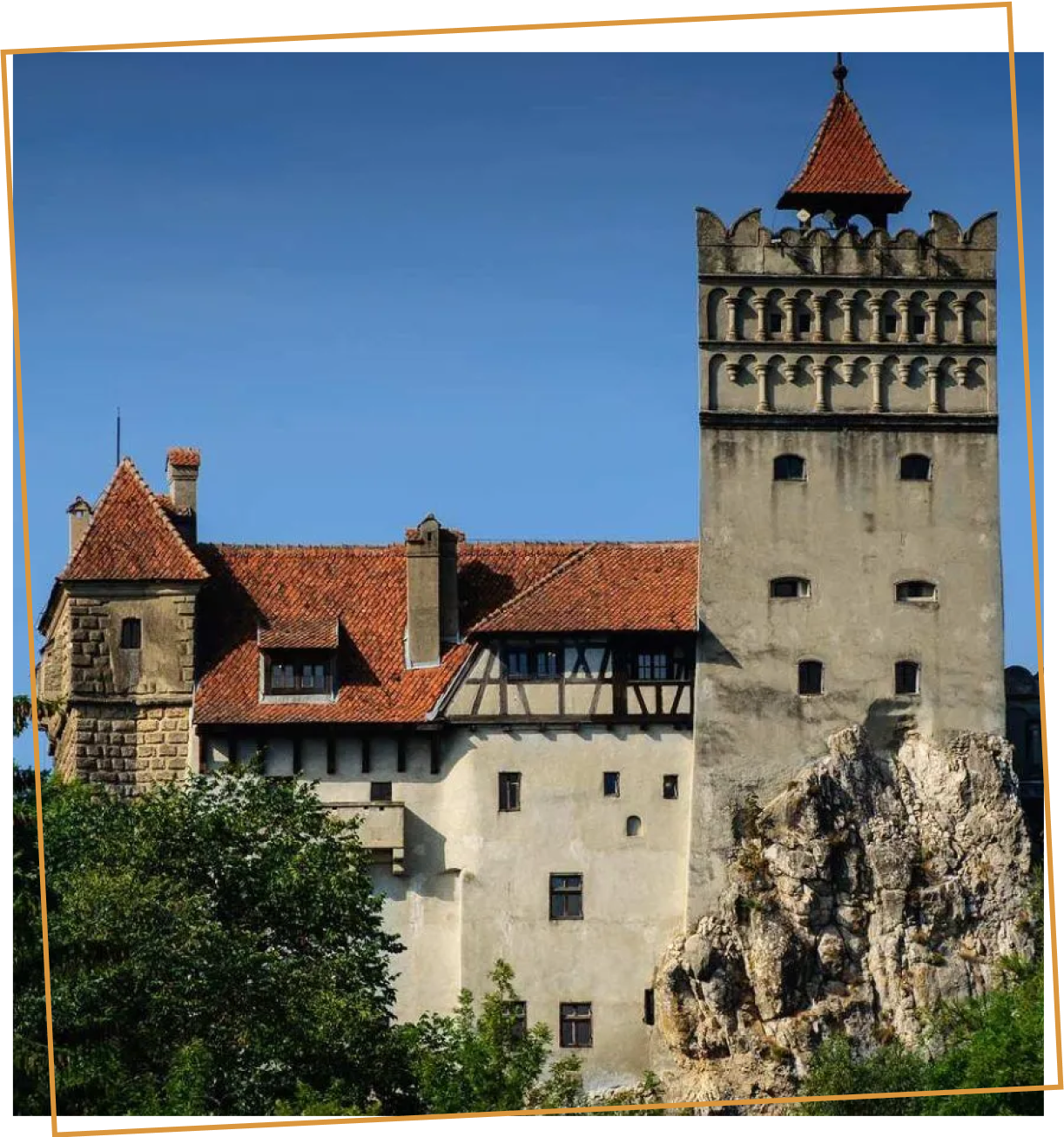
1211-1918
BRAN STEP
Its story was characterized by two major components: its crossroads trade routes and the recurring military invasions that utilized them.
The Bran Pass, one of the most important trans-Carpathian passages, has had a dynamic history. Its story has been characterized by two fundamental aspects: the commercial one, as an intersection of important routes, and the military one, determined by the recurrent invasions that used these routes.
A natural amphitheater, defended to the east by the Bucegi Mountains and to the west by the Piatra Craiului Massif, Bran Pass offered, due to its concave shape, a wide panorama, both towards Țara Bârsei and towards the valley and hills of Moeciu.
BRAN FORTRESS IN THE HANDS OF THE INHABITANTS OF BRAȘOV
In 1497, an initiative by the Brașov senators Bartholomeus Schunckebunck and Petrus Goldschmid, aimed at solving the problem, was submitted to the royal court and became quite influential. The initiative, as well as the unfavorable internal situation for the Hungarian king Vladislav II Jagiello, since the royal treasury was almost empty, led the Brașovites to take over the administration of Bran Fortress and its domain for ten years, in exchange for a loan of 1000 florins.
The inhabitants of Brașov were to maintain the fortress in optimal conditions, guard it and fortify it at their own expense. If, after ten years, the king claimed the fortress, he had to repay the loan to the people of Brașov. Otherwise, the fortress would remain “forever” in the hands of the people of Brașov (perpetuo duximus dandum et annectendumThe agreement was sanctioned by a treaty issued on January 1, 1498 by the Hungarian king.
On December 4, 1498, the Hungarian king renewed the treaty, with some amendments. For an additional sum of 2000 florins, the king agreed to entrust the fortress to the inhabitants of Brașov, this time using more precise language, for a period of ten years. If the king did not repay the loan, the fortress would remain in the possession of Brașov.
In 1500, the Hungarian king granted the Brașovans the revenues obtained from the salt taxes from Feldioara and asked the Transylvanian voivode to cease exercising jurisdiction over the peasants of the Bran domain. When the ten-year term expired, on January 2, 1508, King Vladislav II Jagiello not only did not repay the loan, but also requested a new loan of 2000 florins, pledging the Brașov fortress for another ten years. After a while, the king requested another 1300 florins, so that his debt to the city of Brașov reached the amount of 6300 florins by 1513.
According to documents from that period, as early as 1504, the city of Brașov was authorized to appoint the castellans of Bran Fortress. In 1508, the Hungarian king excluded the Bran fortress from the jurisdiction of the Transylvanian voivode for 25 years, which represented the cumulative duration of the repeated pledges of the fortress. After the expiration of the 25 years, the king no longer repaid the loans to the people of Brașov, thus granting them permanent control of the fortress.
With the administration of Bran Fortress by the city of Brașov, Bran began to prosper. The fortress's revenues increased considerably. They came from several sources: the income of the millers, the earnings from the sale of pepper, the income from the drinks sold in the fortress, the income obtained from the fortress' customs point (hell castri), fines applied by the judges of Brașov and the district, the sheep tax, income from the district's gypsies, earnings from hemp, income obtained from the domain's apiaries, the pig tax, rents on the domain, taxes collected by twenty-six for the city's servants, in addition to the income from salt taxes from Feldioara.
This income allowed the inhabitants to initiate construction and fortification projects for the fortress. The East Tower was doubled in size using parchment (lining material), the interior loggia was arranged, and the enclosure wall was raised, thus creating two rows of ramparts: a lower one for artillery and an upper one, on the guard line, for light weapons. The central tower, the dungeon, and the double-armed columns were also erected during these renovations, and the shingles covering the roofs were replaced with tiles.
The role of the fortress changed considerably during this period; its military function was replaced by administrative and political roles. These transformations were also motivated by the military realities of the time. For the armies of the era, the imposing tower, as the main artillery weapon, made fortifications designed to withstand sieges almost useless.
CONQUEST OF THE KINGDOM OF HUNGARY BY THE OTTOMANS
The political climate in Southeastern Europe was marked by strong tensions at the beginning of the 16th century. The Ottoman Empire was at the height of its power and expansion; the Polish and Hungarian crowns were in severe decline; and the increasingly prominent roles of Russia and Austria were becoming increasingly evident.
These geopolitical changes also affected the Romanian lands, especially the southeastern area of Transylvania and the Bran Fortress. The three provinces were forced to join forces to deal with the new situation. Following several conflicts with the Turks, in early 1522, the Wallachian ruler Radu de la Afumați was forced to retreat to Transylvania through the Bran Pass to ask for help from the Transylvanian voivode.
In the summer of the same year, Radu de la Afumați, together with the troops of John Zapolya, crossed the border into Wallachia through Bran, achieving a victory against the Ottoman troops stationed there. However, the success was short-lived, because, in the subsequent confrontations, the Wallachian ruler was again forced to retreat to Transylvania. In the autumn of 1522 (October–November), the voivode of Transylvania himself, John Zapolya, accompanied Radu de la Afumați through the Bran Pass in a military campaign to expel the Turks from Wallachia. The campaign ended with the decisive victory of the Transylvanian-Wallachian troops at Rucăr.
The year 1526 brought an even more tense political climate to Southeastern Europe. The Hungarians were defeated at Mohács, and the Turks occupied a large part of Hungary. This context amplified the struggle for the throne of Hungary between the voivode of Transylvania, John of Zapolya, and Ferdinand of Habsburg, the Archduke of Austria. The Romanian Lands, and implicitly the Bran Pass, played a significant role in this conflict. In 1529, Moise Vodă, a Wallachian ruler and alleged partisan of Ferdinand, passed through Bran and besieged the fortress for several weeks, without success. At that time, the fortress was defended by the garrison led by the castellan of Brașov, Ioan Hoch. In 1530, a pretender to the throne of Wallachia, Vlad the Impaler, supported by the Turks, entered the Land of Bârsa through Bran and besieged the city of Brașov, also without result.
It should be noted that, throughout the conflict between Ioan Zapolya and Ferdinand of Habsburg, until Zapolya's final victory, Bran Fortress played an important role, constantly oscillating between supporting one or the other of the claimants, depending on the interests of the Brașovans. Some troops wishing to pass through Bran received the consent of the castellan, while others encountered fierce resistance.
After the victory, Ioan Zapolya, aware of the strategic importance of Bran Fortress, intended to take possession of it from the people of Brașov. After strong resistance from the inhabitants of Brașov and their allies, including the Wallachian ruler, Ioan Zapolya changed his mind and accepted that Bran Fortress should remain in Brașov's hands, "for the benefit of his interests."
The end of the struggle for the Hungarian throne did not bring stability to the political system in Transylvania, however. The interference of Turkish and Austrian interests in the province generated new military conflicts, in which Bran Fortress was also involved. In 1541, the troops of the Wallachian ruler Radu Paisie received the consent of the Brașovans to pass through Bran, in the ruler's attempt to punish Ștefan Mailath, who had risen against Ioan Zapolya. In 1547, the Wallachian ruler Mircea Ciobanu passed through the Bran Pass in a campaign against the Wallachian boyars who had rebelled against him and had taken refuge in Brașov. In 1550, Mircea Ciobanu repeated this campaign, passing through Bran again, but this time the expedition had been ordered by the Ottoman sultan against an enemy of Ioan Zapolya. In 1556, a Moldavian-Wallachia expedition, in which the Wallachia ruler Pătrașcu Vodă also participated, entered Transylvania through Bran, with the aim of reinstating Prince Ioan Sigismund on the throne in Cluj.
BRAN FORTRESS IS IN THE POSSESSION OF SIGISMUND OF LUXEMBOURG
Documents from 1395, 1398 and 1406 expressly state that Bran Fortress (and, implicitly, the territory around it) was in the possession of the Hungarian king Sigismund of Luxembourg. The most obvious evidence seems to be the presence of the Hungarian king at Bran in 1395. It is assumed that the king used the fortress during an invasion of Wallachia, when he removed Vlad the Usurper, a pretender to the throne, who was in opposition to Mircea the Elder, an ally of Sigismund of Luxembourg.
The occupation of Adrianople by the Turks in 1354 preceded the conquest of the Balkan Peninsula by the Ottoman Empire, which by the end of the XNUMXth century had extended to the Danube. The imminent Ottoman threat to the inhabitants north of the Danube led to the crystallization of a common interest among the Christian populations of the region.
The first raid of the Turks into Transylvania in 1394, together with the victory of the Wallachian voivode Mircea the Elder at Rovine in 1395, once again encouraged the strengthening of the bond between the two neighboring countries, Hungary and Wallachia.
The rulers of the two countries met in Brașov in the spring of 1395 (on March 7), and established a Treaty of Alliance. The treaty was most likely based on the principles of vassalage specific to the era, built on the pyramidal hierarchical relationships of the Middle Ages. It consecrated the Hungarian king Sigismund of Luxembourg as "Senior", and the ruler of Wallachia, Mircea the Elder, as "Vasal". The treaty also established the obligations of the two parties in the event of an Ottoman invasion.
It is very possible that this treaty was signed at a later date, during the siege of the old administration of Brașov, located behind the current "Hotel Aro". The treaty also recognized the rule of the Wallachian ruler over some territories beyond the Carpathians: Severin, Amlaș and Făgăraș (Mzrcha voivode Transalpinus dux de Fuguras et banus de Zeurine). After the signing of the Treaty of Brașov, some researchers attribute the rule of Bran Fortress to ruler Mircea the Elder. Unfortunately, neither the document dated March 7, 1395, nor the one from 1406, signed in Severin, contain any mention of granting this right to the Wallachian ruler.
TRANSYLVANIAN-MOUNTAIN CONFLICT
In 1608, Gabriel Bathory occupied the throne of the Principality of Transylvania. Bathory tried to reestablish authority and centralize power by limiting the rights and liberties of the Saxon cities. Since the inhabitants of Brașov had acquired firm political and economic authority in the Bran area, possession of the fortress strengthened their strategic position. For this reason, the prince contested the rights of the inhabitants of Brașov over the Bran Fortress and its domain, summoning them first before the court in Sighișoara and then before the Transylvanian Diet in Cluj. The inhabitants of Brașov were asked to present the title justifying their ownership of Bran.
In the following period, there were a series of conflicts over regional political influence between Prince Gabriel Bathory and the Wallachian prince Radu Șerban. In early 1611, Bathory crossed the Bran Pass into Wallachia with a strong army, and Radu Șerban was forced to seek refuge in Moldavia. In the summer of the same year, after reorganizing his army, the Wallachian prince crossed the Tatar Pass into Transylvania and defeated Gabriel Bathory's army right at the walls of Brașov. After the victory, voivode Radu Șerban returned to Wallachia through Bran, without encountering any resistance.
In the spring of 1612, in retaliation against the Brașovites who had supported the Wallachian ruler, Bathory entered the fortresses of Codlea and Râșnov, forcing the castellans Johann Raab and David Horvath to surrender them without a fight.
The occupation of Bran Fortress was extremely harmful for the people of Brașov, both economically — through the impossibility of collecting taxes from the commercial traffic of the pass — and politically, because the connection with the Wallachian ruler was interrupted, and he could no longer send support to Brașov. In 1613, the inhabitants of Brașov regained control of the fortress, after reaching an agreement with Gabriel Bathory.
The prince's reckless actions attracted numerous enemies, including from the overlord—the Ottoman Empire. Thus, in 1613, Gabriel Bethlen was installed as Prince of Transylvania with Turkish support. Shortly thereafter, a military conflict broke out between the two rivals, which lasted almost two years. In October 1613, Ottoman troops led by Ali Pasha Maghiaroglu began a campaign against Gabriel Bathory. During the campaign, the Ottoman leader asked the Brașov County Governor, Hanisch Drut, to order the "ruler of Bran" to use the fortress' cannons to prevent the passage of the "Tatar sultan", apparently called to Bathory's aid. Ali Pasha Maghiaroglu also issued direct orders to the castellan of Bran, threatening him that if he did not comply, "he would receive no good." Bathory was finally defeated in 1615, dying on the battlefield.
After his accession, Prince Gabriel Bethlen ordered the inspection of all the assets belonging to the royal treasury throughout the country. In 1615, during this inspection, the people of Brașov were summoned again to the prince's court to negotiate the ownership of Bran Fortress. The negotiations reached a dead end and no progress was made for about ten years. Finally, in the autumn of 1625, Bethlen accepted that the people of Brașov would retain their ownership of Bran Fortress and its domain, along with the royal revenues (regalia). However, the agreement was not without costs for the people of Brașov. On November 9, 1625, the two parties signed a treaty that imposed harsh conditions on the inhabitants of Brașov, including the loss of military control over the fortress and a very high tax. Despite these unfavorable conditions, the pass represented such an important source of income that the people of Brașov had no choice but to accept Bethlen's terms.
The conditions imposed by the treaty were as follows:
- The people of Brașov must appoint a castellan of Hungarian origin. The castellans are obliged to swear allegiance to the prince, his descendants, the country and the fortress of Brașov. The oath must follow a specific formula, established by the prince.
- The Prince has the right to maintain a garrison in Bran Fortress, as necessary.
- The people of Brașov are obliged to restore and fortify the fortress according to the prince's orders.
- All entrances and roads around the fortress must remain closed, except for the Royal Road and the Paraho Trail.
- The people of Brașov must transfer, definitively and irrevocably, the property of the villages of Părău, Grid, Perșani, Holbav and Țântari (Dumbrăvița) to the Făgăraș Fortress.
- The village of Şercaia becomes the property of the prince.
- The people of Brașov must pay the prince 15.000 florins.
The Transylvanian prince Gabriel Bethlen was fully aware of the strategic importance of Bran Castle, which had been strengthened during the confrontations with Gabriel Bathory. Between 1622–1625, the prince led a series of renovation works on the fortress. The gate tower was rebuilt, the dungeon was restored in the Renaissance style, and the main tower was embellished with double semicircular arches, crowned with a "Polish-Lombard crown." It was also at this time that the progressive ramparts were most likely added to the dungeon and to the front of the main tower (on the northwestern side of the castle). It should also be noted that while until the late XNUMXth and early XNUMXth centuries Bran was called "Citadel," it was during this period that it began to be called "Castle."
PRINCE GEORGHE RÁKÓCZI DONATED THE CASTLE TO THE CITY OF BRAȘOV
It took almost 150 years for the inhabitants of Brașov to regain their rights to the Castle, this time permanently. On April 24, 1651, the Transylvanian prince Gheorghe Rákóczy II signed a treaty donating the castle to the city of Brașov. The treaty included the same provisions as the previous one signed in 1625, as well as several significant additions.
This time, the city of Brașov received a guarantee that both Bran Castle and its domain would remain in its possession. The treaty was signed by Prince Gheorghe Rákóczy II and the inhabitants of Brașov and was later reaffirmed by the Transylvanian authorities, as established (on February 12, 1651) in the Transylvanian legal code. Approbatae constitutiones regni Transilvaniae, title 82, article I.
The growth of Ottoman domination over the Romanian Principalities and the Porte's desire to transform them into vassal states led to the formation of an anti-Ottoman coalition among these countries, which was defeated in 1659. Following this defeat, Bran Fortress was occupied by the troops of Makes Mihaly, a general of George Rákóczy II. In early 1660, after new negotiations, the fortress and the rights to collect customs duties were returned to the inhabitants of Brașov, on condition that they remained loyal to the prince.
EXPERIENCE THE MAGIC OF THIS WONDERFUL PLACE
We invite you to experience the history, myth, intrigue and magic of this wonderful place.
We hope you will always carry with you the spirit that makes us love Bran Castle.